Guides
Do You Need a Rangefinder If You Have a Golf GPS App?
By Chris Chaney
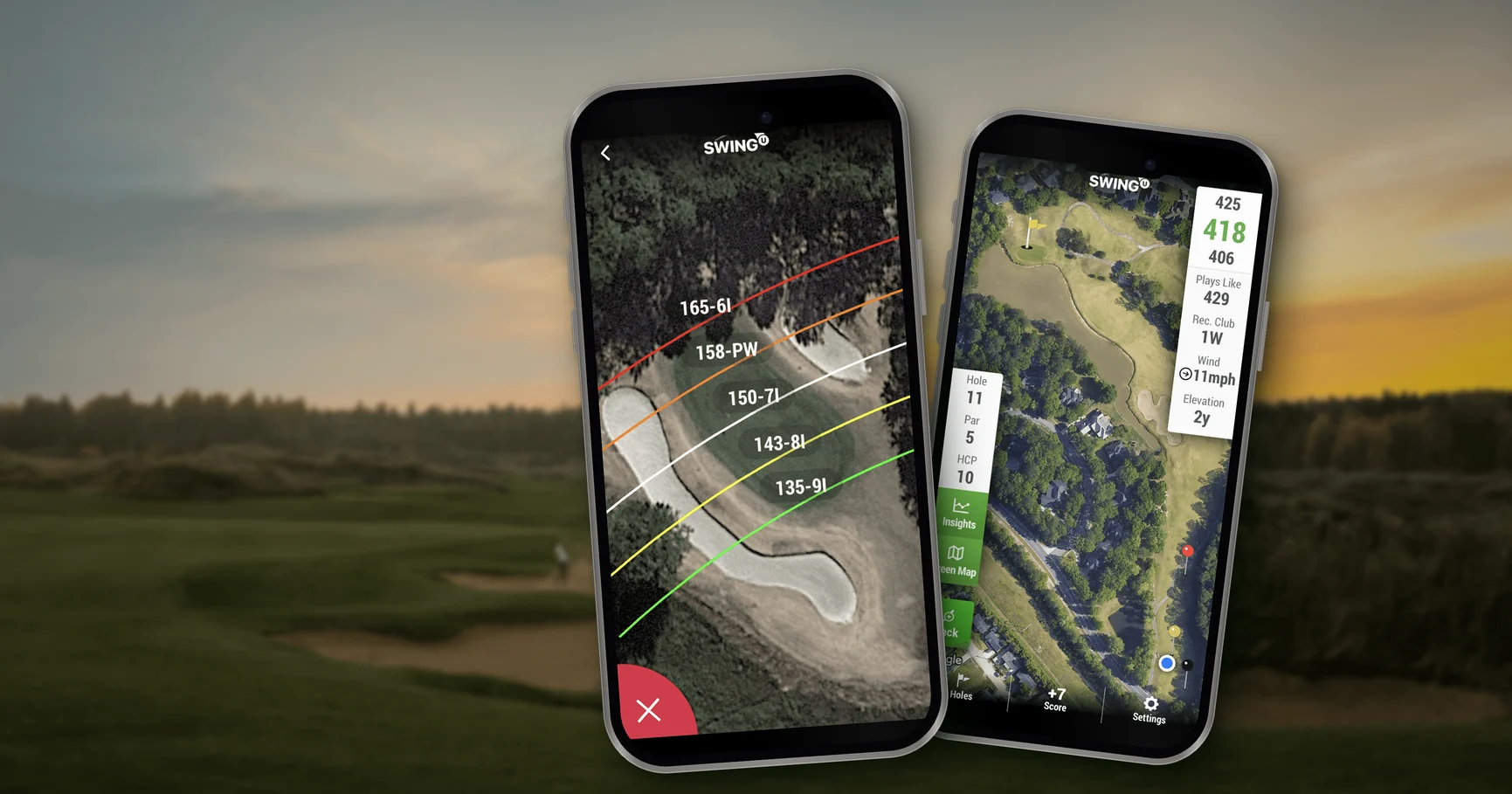
For most recreational golfers, no. A golf GPS app on your phone or watch gives you distances to the front, middle and back of the green and to the hazards on every hole, which covers most of the decisions you make in a round. A laser rangefinder is more precise to a specific target you can see, such as the flagstick. It's worth adding if you want exact pin yardages on approach shots, or if you play competitions that only allow a rangefinder-style device.
The two tools answer slightly different questions. A GPS app tells you where you are on the hole and how far it is to everything around you. A rangefinder tells you exactly how far it is to the one thing you point it at. Here's how they differ, what the Rules of Golf allow, and how to decide what belongs in your bag.
What's the Difference Between a Golf GPS App and a Rangefinder?
A golf GPS app uses your phone's location and a mapped course to show distances. You don't have to aim at anything. Open the hole and you see yardages to the green and to bunkers, water and other hazards, including ones you can't see from where you're standing.
A laser rangefinder fires a laser at a target and measures the distance back to you. It needs a clear line of sight, but it measures the actual flagstick, a tree or the lip of a bunker. Bushnell lists its Pro X3+ as accurate to plus or minus 1 yard.
Golf GPS app | Laser rangefinder | |
|---|---|---|
What it measures | Your position against a mapped course | The distance to whatever you aim at |
Front, middle and back of green | Yes, every hole | Only the parts you can see and aim at |
Exact flag distance | Center of the green, unless you move the flag | Yes, when you can see the flag |
Hazards and layups | Yes, including blind ones | Only targets in your line of sight |
Needs line of sight | No | Yes |
Extra features | Scorecard, shot tracking, stats, and in some apps Plays Like yardages and club recommendations | Some models add slope, which must be off in most competitions |
Cost | SwingU's GPS is free | A separate device purchase |
How Accurate Is a Golf GPS App?
Accurate enough for most shots, with a few yards of wiggle room. According to GPS.gov, GPS-enabled smartphones are typically accurate to within a 4.9-meter (16-foot) radius under open sky, and accuracy gets worse near buildings, bridges and trees.
On a golf course, that means your yardage is usually close but can drift a little, especially under heavy tree cover. For a drive or a long approach to the middle of the green, a few yards rarely changes your club. On a short wedge into a tucked pin, it can.
A few things help your app's accuracy:
Set location access correctly. On iPhone, SwingU's help center recommends setting location access for the app to "Always" so your position updates as you move.
Give it a moment. When you track a shot, turning your screen on as you walk up to your ball gives the app time to lock in your exact location.
Load the course ahead of time if signal is weak. An internet connection is highly recommended but not required in SwingU if you start the round and view each hole before you head out.
How Accurate Is a Laser Rangefinder?
Very accurate to a single target, as noted above. The catch is that you have to see the target and hit it with the laser. On a blind tee shot, a dogleg or a green over a hill, there may be nothing to aim at.
Rangefinders also measure only what you point them at. If you want the carry over a bunker, the front edge and the back of the green, that's three separate readings. A GPS app shows all of them at once.
When Does a GPS App Beat a Rangefinder?
A golf GPS app is usually the better tool when:
You can't see the target. GPS works on blind shots, doglegs and elevated greens, because it doesn't need line of sight.
You want the whole picture. Front, middle, back, hazards and layup numbers are on one screen.
You want more than yardages. The same app keeps your score, tracks your club distances and builds your stats.
You'd rather not buy another device. You already carry your phone.
With SwingU, the GPS rangefinder is free and works on every course in the world, with a community-verified database of 34,000+ courses. Every mapped course is available to every SwingU user, free or paid. You can tap the flag on the green to get distances to different parts of the green, and on iPhone the Live Activity banner shows front, middle and back distances right on your lock screen. If you just want yardages, you can even turn off the scorecard and use SwingU only as a rangefinder.
When Is a Rangefinder Worth It?
A rangefinder earns its spot in the bag when:
You want the exact flag distance. On short approaches, knowing the pin is 4 yards past the middle matters more than it does from 200 yards out.
You play under tree cover. Trees are one of the things that make phone GPS less accurate.
You play competitions that restrict apps. Some events allow only optical, rangefinder-style devices. On the PGA Tour-run tours that allow distance-measuring devices in 2026, players and caddies must use a traditional rangefinder-style instrument, and phones, watches and apps aren't permitted.
Some golfers carry both. They use the app to see the hole and pick a target, and the laser to confirm the exact number to the flag.
Are Golf GPS Apps and Rangefinders Legal in Tournaments?
Usually, yes, with limits. Under Rule 4.3a of the Rules of Golf, you're allowed to get distance and direction information from a distance-measuring device. You're not allowed to measure elevation changes or get a recommended line of play or club selection based on where your ball is. A Committee can also ban distance-measuring devices entirely with Model Local Rule G-5, so always check the Local Rules.
The USGA's guide to distance-measuring devices says you may use a device that has prohibited functions, such as slope or plays-like distances, as long as you don't access them during the round. Laser rangefinders handle this with a slope switch. Bushnell's Pro X3+ manual says the slope feature must be off for the device to conform to USGA rules.
SwingU handles it with a round type. Mark your round as Tournament or Qualifier in Round Setup and the app turns off club recommendations, wind speed and elevation, and Plays Like distances for that round. Your round type may carry over to future rounds, so switch back to Standard when the event is over.
Can a GPS App Do What a Slope Rangefinder Does?
For casual rounds, a good app can do more. SwingU Plus ($59.99 a year) adds an AI Digital Caddie with Plays Like yardages that adjust for live wind and elevation, plus club recommendations. Your recommendations start from the average club distances you enter when you set up your bag, then get smarter as you use shot tracking, because each tracked shot updates that club's average.
Plus also includes StrackaLine Green Maps for 20,000+ courses, Hole Insights and hole notes. As with a slope rangefinder, these are for practice and casual play, not competitions. For how SwingU stacks up with other apps on features like these, see our guide to the best golf apps of 2026.
Can You Use a Golf GPS App on Your Watch Instead?
Yes. A watch keeps the yardages on your wrist so your phone can stay in your pocket. SwingU works with Apple Watch Series 4 and later with the iPhone app, and with Wear OS 10 watches with the Android app. Distances and scoring on the watch are free. You start the round on your phone, and your iPhone needs to stay within Bluetooth range of your Apple Watch.
Frequently Asked Questions
Is a golf GPS app as accurate as a rangefinder?
Not to a single target. A good laser rangefinder can be accurate to about a yard to whatever you aim at (Bushnell lists plus or minus 1 yard for its Pro X3+). Phone GPS is typically accurate to within about 16 feet under open sky, according to GPS.gov, and can drift near trees. For most shots, that difference won't change your club.
Do I need a rangefinder as a beginner?
No. A free GPS app gives beginners everything they need: distances to the green and hazards on every hole, plus a scorecard. SwingU's GPS, scorecard and SwingU Handicap Estimate (after 9 holes) are free.
Can I use my phone as a rangefinder?
Yes. A golf GPS app turns your phone into a GPS rangefinder. It measures from your location to mapped points on the hole rather than with a laser, so you don't need to see the target.
Can I use a golf GPS app in a tournament?
Usually, unless the Committee bans distance-measuring devices by Local Rule. You can't use features that measure elevation, adjust distances for conditions or recommend a club. In SwingU, set the round type to Tournament or Qualifier to turn those off. Some professional tours allow only rangefinder-style devices, so check the rules for your event.
Does a rangefinder work on blind shots?
Not well. A laser needs a clear line of sight to the target. A GPS app shows distances whether or not you can see the green.
Is a GPS watch better than a phone app?
It's more convenient, not more accurate. A watch saves you from pulling out your phone on every shot. With SwingU, you get distances and scoring on your wrist, with the round running from your phone.
Do I need both a rangefinder and a GPS app?
Only if you want exact flag yardages on top of the full view of the hole, or you play events that require a rangefinder. Many golfers start with a free app and add a rangefinder later.
The Bottom Line
If you're deciding where to start, start with a golf GPS app. It gives you the whole hole, works on blind shots, keeps your score and costs nothing. Add a laser rangefinder if you want exact pin distances on approach shots or play events that require one. Comparing apps? See how SwingU compares with TheGrint, or download SwingU free and get yardages on your next round.
Chris Chaney
Managing Editor, SwingU
Chris has been golfing since age 3 and has more than 30 years in the game. A competitive mid-am in Cincinnati, Ohio, he plays to a handicap between scratch and +3 and has spent 10 years at SwingU and Golf Genius.